Equipment Financing for Plumbing Companies in Tallahassee

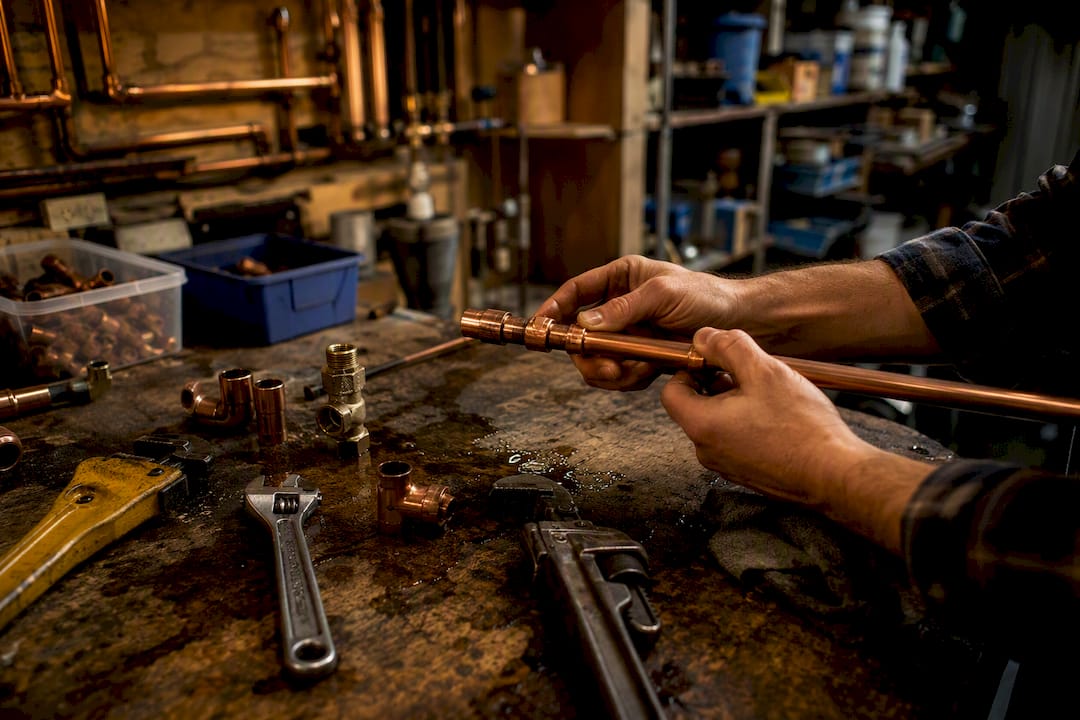
For most Tallahassee plumbing companies, an equipment loan or lease arranged through a specialist brokerage beats walking into a single bank branch and hoping for a yes. Equipment financing tends to be the fastest, most cost-effective route to a new service van, hydro-jetter, or inspection camera because the asset itself secures the debt, which usually means friendlier approval odds than an unsecured loan. The move that saves you the most time: pre-qualify with a soft credit pull so you can compare real offers before you commit to one.
Equipment financing (loan or lease) fits asset-specific purchases best
A soft credit pull lets you shop multiple lenders without hurting your score
Compare at least two or three offers before signing anything
Table of Contents
What Are Your Equipment Financing Options for Plumbing Companies?
What Do You Need to Qualify for Plumbing Equipment Financing?
How Much Does Equipment Financing Cost, and What About Taxes?
Are There Local Tallahassee or Florida Programs Worth Checking?
How Coti Funding Helps Tallahassee Plumbing Businesses Get Equipment Funded
What Are Your Equipment Financing Options for Plumbing Companies?
Plumbing contractors in Tallahassee generally choose from five financing categories, and picking the wrong one is the most common expensive mistake. An equipment loan finances a specific asset, with the equipment as collateral, and you own it once you’ve paid it off. An equipment lease lowers your monthly payment and often includes maintenance, but you may not own the asset unless you exercise a purchase option at the end of the term. The SBA 504 and 7(a) programs offer competitive rates for larger equipment purchases, though the SBA’s own equipment guidance notes these programs typically demand stronger financials and more paperwork than alternative lenders require. Term loans and business lines of credit cover broader needs, like payroll gaps or inventory, rather than a single piece of equipment. Invoice factoring turns unpaid customer invoices into cash flow, which helps if slow-paying commercial clients are squeezing your cash position.
Equipment loan or lease: best for a specific van, camera, or jetter purchase
SBA loan: best for large purchases when you have strong financials and time to wait
Line of credit or factoring: best for cash flow gaps, not asset purchases
Equipment financing tends to preserve working capital better than a general loan when the purchase is asset-specific, which is exactly the situation most plumbing companies face when a truck breaks down or a bid requires new capability.
What Equipment Do Plumbing Companies Typically Finance?
Financing needs in this trade run from a few thousand dollars for hand tools to six figures for a fully outfitted service fleet. Here’s the equipment roster that shows up most often in financing applications:
Service vans and trucks — usually the largest single expense, often costing tens of thousands of dollars per vehicle once you add racking and tool storage
Hydro-jetters — trailer-mounted units for commercial drain cleaning can be moderately to highly priced, depending on the model
Inspection cameras — pipe inspection systems vary widely in price, with advanced models costing significantly more
CIPP (cured-in-place pipe) lining equipment — a higher-ticket category, frequently financed rather than bought outright given the cost
Pipe robots and cutters — specialized trenchless repair tools that add capability for larger commercial contracts
Trenchers and excavation attachments — needed for full-service plumbing companies handling underground repairs
New equipment usually qualifies for longer terms and lower rates; used equipment financing is available but often carries shorter terms and a larger down payment. Whatever you finance, roll installation, shipping, and sales tax into the total request instead of paying those out of pocket. Lenders would rather finance the full cost upfront than see you drain cash reserves on incidentals.
What Do You Need to Qualify for Plumbing Equipment Financing?
Lenders move fastest when your paperwork is ready before you apply, not after. According to Bankrate’s overview of equipment loans, most lenders want to see business bank statements, a profit-and-loss statement, and an equipment quote or invoice with the make, model, and serial or VIN number attached.
Build this checklist before you start shopping:
Time in business (six months to two years, depending on the lender)
Recent business bank statements, typically the last three to six months
Profit-and-loss statement or basic financials
Personal and business credit history
A formal equipment quote or invoice from the dealer or vendor
Willingness to sign a personal guarantee, especially for newer businesses
A soft credit pull during pre-qualification lets you see estimated terms without a hard inquiry hitting your credit file, which matters if you’re comparing three or four lenders in the same week. If your credit is thin or your company is newer than two years old, expect lenders to ask for a larger down payment, a shorter term, or a cosigner to offset the risk.
Pro Tip: Get your equipment quote finalized with exact specs before you apply. Vague invoices are one of the top reasons underwriting stalls for a week or more.
How Much Does Equipment Financing Cost, and What About Taxes?
Rates and terms vary by asset type, credit profile, and lender, but a few patterns hold across the industry. Vehicles and trailer-mounted equipment commonly finance over 36 to 72 months, while smaller tools like cameras might carry 24 to 48 month terms. Down payments range from zero (for well-qualified borrowers on newer equipment) up to 20% for used equipment or thinner credit files.
Because equipment serves as its own collateral, lenders can approve equipment loans faster and with more credit flexibility than unsecured business loans, though defaulting still risks repossession of the asset.
Leases typically end with three options: return the equipment, renew the lease, or buy it at fair market value or a predetermined price. Read that end-of-term clause closely, because a lease that looks cheaper monthly can cost more over time if the buyout price is inflated.
On the tax side, Section 179 of the IRS tax code lets qualifying small businesses deduct the full purchase price of eligible equipment in the year it’s placed in service, rather than depreciating it over several years. This can meaningfully offset the cost of a new hydro-jetter or service van in the year you buy it, but eligibility depends on your specific tax situation. Talk to a CPA before you assume any purchase qualifies.
Terms: 24 to 72 months depending on asset type
Down payments: 0% to 20%, tied to credit and equipment condition
Tax treatment: Section 179 may allow full first-year deduction, subject to CPA review
Loan, Lease, or Line of Credit: How Do You Choose?
Match the financing structure to how you’ll actually use the equipment, not just to whichever offer has the lowest monthly payment. Three questions drive the decision: How long will you use this asset before it’s obsolete or worn out? Do you want to own it outright, or would a lower payment matter more than ownership? And is this purchase asset-specific, or do you actually need general cash flow?
Buying a service van you’ll run for eight years — an equipment loan usually wins, since you want ownership and the asset has a long useful life
Testing a new CIPP lining system before committing long-term — a lease with a purchase option limits risk while you prove out the new service line
Covering payroll during a slow month while still eyeing a camera upgrade — a line of credit handles the cash flow gap without tying financing to a specific asset
When you compare offers, look past the headline rate. Compare the effective annual cost including fees, the flexibility of prepayment, and what happens at the end of the term. City National Bank’s rundown of equipment finance benefits points out that leases can lower monthly costs but typically don’t transfer ownership unless you exercise a purchase option, so factor that into your real cost comparison.
What’s the Application Process and Timeline?
The path from application to funded equipment usually runs through six steps: prepare your documents, get pre-qualified with a soft credit check, compare offers side by side, submit the vendor invoice, go through underwriting, and receive funding.
Document prep and pre-qualification: often same day
Underwriting review: typically 24 to 72 hours, though complex SBA-backed deals can take up to two weeks
Funding after approval: as fast as 24 hours with many alternative and broker-arranged lenders
The single biggest cause of delay is an incomplete or vague equipment invoice. Get the vendor to list the exact make, model, VIN or serial number, and total price including tax and delivery before you submit it to underwriting. A missing serial number or an invoice that doesn’t match the quoted price can bounce an application back and cost you several days you didn’t need to lose.
Are There Local Tallahassee or Florida Programs Worth Checking?
Before you finalize private financing, it’s worth a quick check of municipal and county resources. The City of Tallahassee and Leon County periodically run small business loan and grant programs through their economic development offices, and eligibility, funding amounts, and application windows change often enough that you should confirm directly with program administrators rather than relying on secondhand information.
Check the City of Tallahassee’s economic development pages for current small business programs
Check Leon County’s business assistance resources for grants or matching funds
Confirm whether a local program can be stacked with private equipment financing, and whether timelines line up with your equipment purchase
If a local program exists and fits your timeline, it can reduce how much you need to finance privately. If it doesn’t fit, private equipment financing remains available on its own timeline without waiting on a public program cycle.
How Coti Funding Helps Tallahassee Plumbing Businesses Get Equipment Funded
Cotifunding works as a brokerage, connecting Tallahassee plumbing companies with independent funding providers rather than acting as the lender itself. That distinction matters for how the process actually feels: instead of applying separately to five banks and alternative lenders, you submit one application and see comparable offers across equipment financing, SBA-backed options, lines of credit, and working capital products.
Soft credit pull pre-qualification, so shopping multiple offers doesn’t ding your credit
Coverage across plumbing company financing, SBA programs, and general working capital
Funding timelines commonly in the 24 to 72 hour range once an offer is accepted and documentation is complete
Approval odds and exact rates depend on your financials and the specific lender matched to your file, since Cotifunding arranges financing rather than underwriting it directly.
A Practical Starting Play for Plumbing Owners
Start by pre-qualifying before you fall in love with a specific truck or jetter. Watch for three things: mismatched loan terms against the equipment’s actual useful life, buried fees in the lease schedule, and stretching your monthly payment so thin it strains payroll during a slow season. Prepare your documents, then compare offers side by side.
— Eduardo
Financing Your Next Equipment Purchase
Equipment financing arranged through a brokerage typically gets Tallahassee plumbing companies funded faster and with more comparable offers than applying lender by lender.
Point | Details |
Match product to purpose | Use equipment loans or leases for specific assets; use lines of credit or factoring for cash flow gaps. |
Prepare documents early | Bank statements, P&L, and a detailed equipment invoice with serial numbers speed up underwriting. |
Compare more than rate | Weigh effective annual cost, fees, and end-of-term buyout terms before signing. |
Check the tax angle | Section 179 may allow a full first-year deduction on qualifying equipment, but confirm with a CPA. |
Use a brokerage to compare | Cotifunding connects Tallahassee plumbing companies to multiple independent lenders through one soft-pull application. |
Get Started With Equipment Financing Through Cotifunding
If you’ve read this far, you already know equipment financing usually beats stretching cash reserves or juggling applications at five different banks. Cotifunding is the brokerage route for Tallahassee plumbing companies that want one application and multiple comparable offers instead of five separate credit pulls and five separate sales calls.
Cotifunding works with independent funding providers across equipment financing, SBA-backed loans, lines of credit, and working capital, matching your file to lenders suited to plumbing and related trade businesses. The same soft-pull pre-qualification process that works for financing a hydro-jetter or service van also applies if your next purchase looks more like the vehicles and diagnostic tools covered under auto repair shop and equipment financing. Start by submitting your equipment quote and basic financials for a soft-pull pre-qualification, and you’ll have comparable offers to review typically within a day or two.
Sources
This article draws on guidance from the IRS on Section 179 deductions, the SBA’s equipment financing guidance, FitSmallBusiness’s comparison of equipment financing and business loans, Bankrate’s breakdown of equipment loan types, J.P. Morgan’s insights on equipment loans, and City National Bank’s equipment finance benefits. Tax and legal questions specific to your business should go to a licensed CPA or attorney.
Recommended
Disclosure: Coti Funding is not a direct lender. We connect businesses with independent third-party lenders and financing providers. Financing products, rates, terms, funding amounts, approval requirements, and funding timelines vary by provider and applicant qualifications and are not guaranteed. Any rates, terms, examples, or scenarios presented in this article are for general informational and educational purposes only and may not reflect actual offers available to a particular business. Submission of information or an application does not guarantee approval or funding. This content does not constitute financial, legal, tax, or investment advice.
Comments