60–120 Day SBA Wait? Founders: Match Startup Funding to Your Stage


Startup funding falls into three practical buckets: equity, debt, and non-dilutive options, and your stage and cash flow decide which to prioritize. Pre-revenue companies chasing growth generally need equity because they can’t service debt payments yet. Businesses with predictable revenue should lean toward debt to avoid giving away ownership. Everyone should check non-dilutive routes first, especially SBA-backed loans, before trading away equity or taking on fixed repayment risk.
TL;DR:
Non-dilutive funding options like SBA loans and revenue-based financing are often underestimated but are critical for growth without giving up equity.
Matching the funding type to your stage is essential; pre-seed startups should focus on bootstrapping and small angel checks, while revenue-generating businesses can leverage debt or SBA programs.
Preparing comprehensive financial documents and a clear use-of-funds plan speeds up funding approval processes, especially for SBA loans which can take three to four months.
Comparing multiple funding offers through a brokerage saves founders weeks of application time and helps identify the most cost-effective solutions.
Founders should negotiate effective APR, understand the true costs, and build relationships early to secure better terms and future support.
Table of Contents
What Are the Main Startup Funding Options?
Every founder eventually has to pick from a short list of real options, even though the marketing around each one makes it sound more complicated than it is. Here’s what actually exists, what it costs you, and who it tends to fit.
Bootstrapping and friends & family money comes first for a reason. It’s your own savings, revenue you’ve already generated, or checks from people who trust you personally rather than your spreadsheet. There’s no dilution and no interest rate, but the risk lands entirely on relationships you can’t afford to damage. A $15,000 loan from your sister that goes bad doesn’t just cost you money.
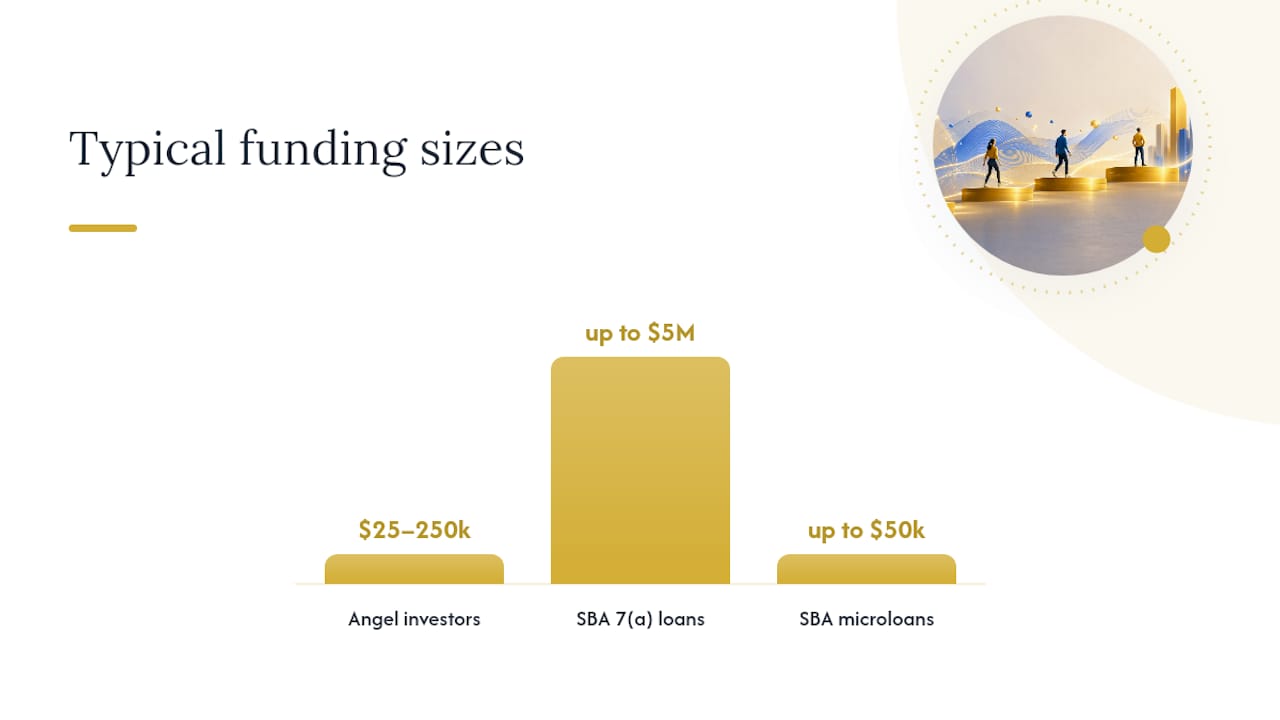
Angel investors typically write checks between $25,000 and $250,000, sometimes more when they syndicate with other angels. They’re individuals investing their own money, often ex-founders or executives who bring more than capital. A good angel opens doors to your first ten customers or your first head of sales. A bad one just wants updates and equity with no real value add.
Venture capital enters once you have some proof: traction, a repeatable sales motion, or a product people already can’t live without. Series A checks commonly run into the millions of dollars depending on sector and geography, with expectations of significant return potential over several years. VCs move in stages, and each round resets your valuation conversation.
Crowdfunding splits into three distinct models people conflate constantly:
Rewards-based crowdfunding (think product preorders) trades goods or perks for money, no equity given up.
Equity crowdfunding lets non-accredited investors buy small stakes, regulated under Regulation Crowdfunding rules in the United States.
Debt crowdfunding (peer-to-peer lending platforms) functions like a loan syndicated across many small lenders.
Bank loans and business lines of credit require collateral, a credit history, and usually two or more years in business, which locks most true startups out. A line of credit is more flexible than a term loan because you draw only what you need and pay interest on the balance, not the full limit.
SBA loan programs are the backbone of non-dilutive small business financing in the United States, and they deserve specific attention rather than a vague mention. The SBA offers three primary programs: 7(a) loans, which can reach up to $5 million and cover working capital, equipment, and real estate; 504 loans, structured for major fixed-asset purchases like buildings or heavy equipment; and microloans, capped at $50,000, delivered through nonprofit intermediary lenders rather than banks directly. These are government-backed loans issued by participating lenders, meaning the SBA guarantees a portion of the loss if you default, which is what convinces banks to approve applicants they’d otherwise reject.
Revenue-based financing ties repayment to a percentage of monthly revenue rather than a fixed schedule, which flexes with slow months but can cost more overtime than a conventional loan.
Merchant cash advances front you a lump sum against future card sales, repaid via a fixed daily or weekly percentage of receipts. They’re fast, often funded within 48 hours, but the effective APR frequently runs far higher than a term loan.
Invoice factoring lets you sell unpaid invoices to a factoring company for immediate cash, typically at fees between 1% and 5% of the invoice value, which works well if your bottleneck is slow-paying B2B clients rather than a lack of demand.
Grants sound appealing because they’re free money, but there’s no blanket federal grant program for starting a private business. What exists is scattered: research grants tied to specific innovation categories, state economic development funds, and nonprofit competitions, all narrow in scope and competitive to win.
Accelerators and incubators (think structured cohort programs) give you a small check, typically $20,000 to $150,000, in exchange for equity, usually 5% to 7%, plus months of mentorship and a demo day in front of investors.
Debt vs. Equity: Which Actually Fits Your Startup?
The tradeoff comes down to two questions: can your business service fixed payments, and how much control are you willing to give up to avoid that obligation? Debt preserves ownership but requires repayment regardless of how your month went. Equity removes that repayment pressure entirely, but it means someone else now owns a piece of every future decision you make.
HubSpot’s guidance on this choice is blunt: pick equity when you’re pre-revenue or need strategic guidance beyond capital, and pick debt when you have predictable cash flow and want to keep control. There’s a tax wrinkle worth knowing too. Interest payments on business debt are often deductible, which effectively lowers your real borrowing cost, while dividends or returns paid to equity investors carry no such deduction.
A few realities shape which side makes sense:
Equity dilutes ownership permanently; a 20% stake given up in a seed round doesn’t come back.
Debt creates a fixed obligation that doesn’t care whether your revenue dipped this quarter.
Interest expense is frequently tax-deductible, while equity payouts are not.
High interest-rate environments can make equity cheaper in the long run, even with dilution factored in, because the “cost” of debt climbs with rates.
Market timing matters more than most founders assume. When venture funding tightens, as it has in multiple cycles over the past decade, debt becomes the faster path if you already have revenue, simply because there are fewer investors competing to fund you.
Convertible notes and SAFEs exist precisely to avoid picking a lane too early. They’re structured as debt-like or equity-like instruments that convert into equity at a future round, letting you raise money now without settling on a valuation you might regret in six months. Venture debt shows up later, typically alongside or right after an equity round, as a way to extend runway without diluting further; it usually comes with warrants attached, so understanding the conversion mechanics before signing matters more than most founders realize.
One data point worth sitting with: SBA 7(a) loans, the most commonly used SBA product, can go as high as $5 million, while microloans through intermediary lenders cap out at $50,000. That’s a massive gap in scale between two programs that both fall under “SBA financing,” and it’s why the specific program matters more than the SBA brand name alone.
Which Funding Fits Your Startup’s Stage?
Matching the funding type to where your business actually stands saves you months of pitching the wrong people.
Pre-seed. You’re likely pre-revenue or barely generating any. This is bootstrapping territory, plus friends & family, small angel checks (often under $50,000), rewards-based crowdfunding for product validation, and accelerator programs that combine a small check with structure and access.
Seed. You have a product and early signal, maybe some paying customers. Seed funds and angel syndicates typically write $250,000 to $2 million here. Convertible notes and SAFEs dominate this stage because setting a formal valuation this early is mostly guesswork.
Series A and beyond. You need repeatable, provable traction, not just promise. Institutional venture capital takes over, often paired with venture debt to extend runway between rounds without additional dilution.
Post-revenue and growth stage. Once cash flow is consistent, debt options open up meaningfully: SBA loans for expansion or equipment, business lines of credit for working capital gaps, invoice factoring if B2B clients pay slowly, and revenue-based financing when you want flexible repayment tied to actual sales.
The mistake founders make most often at this stage is skipping ahead. Pitching institutional VCs before you have Series A level traction wastes your time and theirs. Applying for an SBA loan with zero revenue history gets you a fast rejection instead of fast capital.
How Much Should You Actually Raise?
Start with a runway calculation, not a round number that sounds impressive. Add up your one-time startup costs (equipment, legal setup, initial inventory) separately from recurring monthly costs (payroll, rent, software), then multiply the recurring number by 12 to 24 months depending on how conservative you want your cushion.
Run a break-even analysis next: at what revenue level do your monthly costs stop exceeding your monthly income? The SBA recommends tying your funding request directly to a five-year outlook, specifying exactly how much you need, what it’s for, and whether you’re asking for debt or equity with what terms.
Lenders and investors expect a specific document set before they’ll seriously engage:
A pitch deck or business plan outlining the opportunity and your traction to date.
Financial statements and projections, usually three years historical (if available) and five years forward.
A capitalization table showing who owns what, critical for any equity conversation.
A clear, itemized use-of-funds breakdown, not a vague “growth and operations” line.
Pro Tip: Build a one-page financial summary before you build the full deck: key metrics, current runway, unit economics, and monthly burn rate. It cuts down the back-and-forth questions and speeds up how fast a lender or investor can say yes.
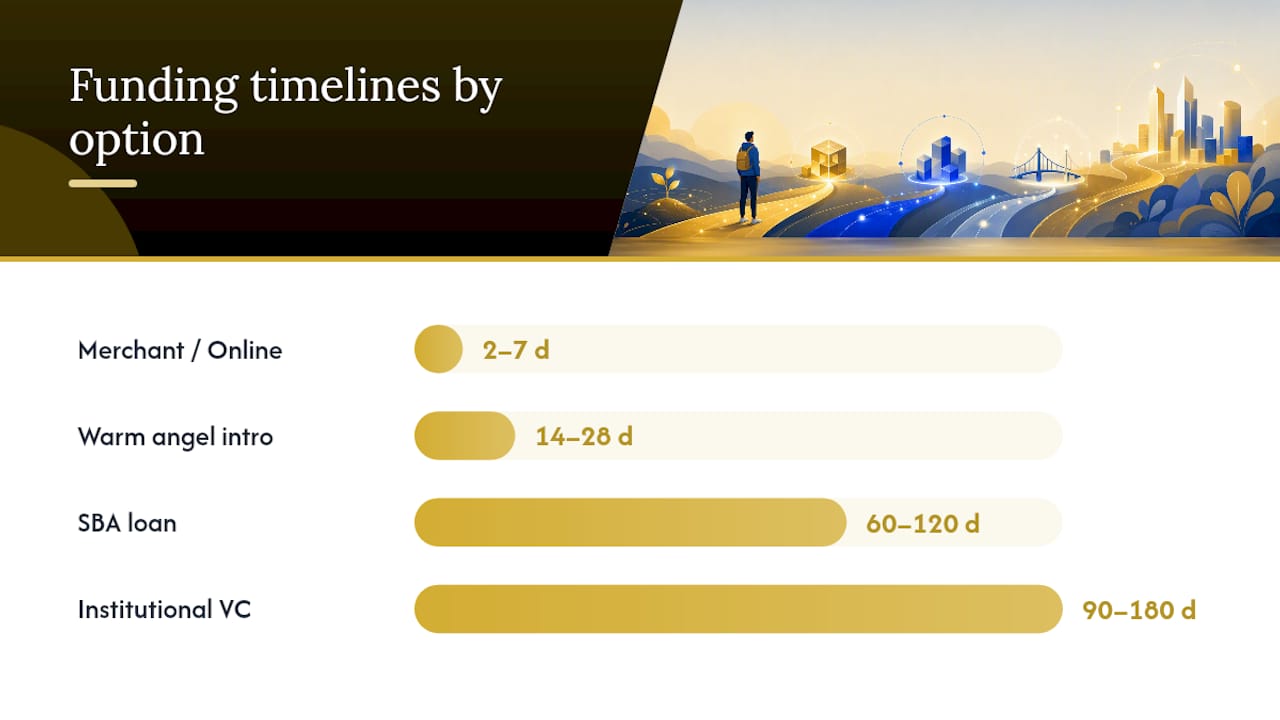
Realistically, budget lead time. SBA loans typically take 60 to 120 days from application to funded, so start that process three to four months before you actually need the cash in hand. Equity rounds can move faster with a warm introduction, but often take just as long once due diligence starts.
SBA Loans and Other Non-Dilutive Paths
Non-dilutive funding is the option most founders undervalue simply because it takes more paperwork upfront than a check from an angel. But no equity changes hands, which matters enormously if you plan to raise again later.
The SBA’s three core programs cover different needs: 7(a) for general working capital, equipment, and expansion (up to $5 million); 504 loans for major fixed-asset purchases like commercial real estate; and microloans, capped at $50,000, aimed at very early-stage or underserved borrowers who can’t yet qualify for a full bank loan. Our guide to the SBA microloan program breaks down eligibility specifics if that smaller cap fits your current needs.
Lenders look for a few consistent signals regardless of program:
Time in business, usually at least one to two years for standard 7(a) loans (microloans are more flexible here).
Personal credit score, often 650 or higher, plus a personal guarantee on the loan.
Some collateral or a demonstrated ability to repay from cash flow.
A complete, well-organized application package with no missing financials.
Working with an SBA-preferred lender, one who processes these loans regularly, can meaningfully cut down approval time compared with a lender handling their first SBA application. Our breakdown on how to skip the typical six-month SBA wait covers specific tactics for speeding that process. Grants remain a secondary option worth checking, but treat them as a bonus, not a plan, since no universal federal grant program exists for private startups.
Short-Term and Alternative Funding Worth Knowing
Sometimes you don’t need a full round. You need a bridge, and these options fill that gap faster than traditional financing ever could.
Crowdfunding campaigns typically run 30 to 60 days; rewards-based needs a compelling product story, equity-based needs regulatory compliance and more lead time to structure properly.
Accelerators trade 5% to 7% equity for mentorship, a peer cohort, and a demo day audience of investors, which can be worth far more than the check itself if the network fits your sector.
Merchant cash advances get you cash fast, often within days, against future card sales, but carry effective costs well above a standard term loan. Read our merchant cash advance breakdown before signing anything.
Invoice factoring solves the slow-paying-client problem specifically, charging 1% to 5% per invoice rather than a flat interest rate.
Online lenders move fast, sometimes 24 to 72 hours, but that speed typically comes with a higher effective APR than a bank or SBA loan.
Why Comparing Offers Beats Calling Lenders One by One
Contacting five lenders individually means five separate applications, five hard or soft credit checks, and five sets of paperwork to reconcile. A brokerage model flips that: one application, multiple offers, and a soft credit pull that doesn’t ding your score just for shopping around.
That’s the structural value a brokerage brings to this process, and it’s worth understanding before you spend a week filling out redundant forms. Coti Funding facilitates access to a range of funding types, including fast, accessible funding options, merchant cash advances, and SBA loan facilitation, and has offered promotional 0% interest startup funding in certain cases. None of that means approval is guaranteed. Every offer still depends on the underlying lender’s own criteria: your credit profile, time in business, revenue, and collateral.
A single application that surfaces multiple real offers saves founders the weeks they’d otherwise spend chasing separate approvals from separate lenders, each with its own paperwork and its own timeline.
Transparency matters here more than speed alone. Knowing upfront that a brokerage compares offers rather than issuing funds itself sets the right expectation before you apply.
Decision Framework: Choosing the Right Option
Match your primary goal to the right instrument before you start reaching out to anyone.
Prioritizing growth speed over ownership? Equity or venture debt fits; you’re trading dilution for capital and speed.
Prioritizing control and ownership retention? Debt or non-dilutive options fit better, assuming your cash flow can service payments.
Need a bridge, not a full round? Convertible notes, revenue-based financing, or invoice factoring solve short-term gaps without a full fundraising cycle.
Before signing anything, ask direct questions: what’s the actual rate versus the effective APR after fees, are there prepayment penalties or covenants, and what’s the realistic timeline to funding. Red flags include vague fee structures, pressure to sign within 24 hours, and covenants that restrict how you run daily operations.
Pro Tip: Always request a sample term sheet before you apply. If a lender or investor won’t show you one until after you’ve committed, that’s a signal to look elsewhere.
Getting From Application to Funded: What to Expect
Preparation determines your timeline more than the funding type itself does. Founders who show up with a complete package, financials, projections, a clear use-of-funds statement, move through underwriting noticeably faster than those submitting piecemeal.
For SBA loans specifically, expect 60 to 120 days from application to funded, which means starting the process a full quarter before you need the cash. Equity rounds vary more widely: a warm angel introduction with a fast decision-maker might close in two to four weeks, while an institutional VC round with full due diligence often stretches three to six months from first meeting to wired funds.
Short-term options move faster by design. Merchant cash advances and many online lenders can fund within 48 hours to a week, which explains why founders reach for them when a specific opportunity, a bulk inventory discount, an unexpected order, won’t wait for a slower process. Our guide on funding options that fund in 24 to 72 hours covers which routes actually deliver on that speed versus which ones just advertise it.
The practical sequence that works: nail down your number first (runway plus break-even), assemble your document package second, then match your timeline to the option, applying for slower, cheaper capital (SBA, bank lines) well before you’re desperate, and reserving faster, costlier options for genuine emergencies rather than routine cash flow gaps.
How to Negotiate Terms With Investors and Lenders
Negotiation starts before the term sheet ever appears, back when you’re choosing which three to five lenders or investors to seriously engage. Having competing offers in hand is the single strongest lever you have, because a lender who knows you have alternatives moves off rigid terms faster than one who thinks you’re stuck.
With lenders, focus negotiation on the effective APR (not the headline rate), any origination or prepayment fees, and collateral requirements. Ask directly whether the rate is negotiable based on your credit profile or whether it’s fixed by policy. With equity investors, the real negotiation usually centers on valuation, board seats, and protective provisions, terms that limit what you can do without investor approval even after the check clears.
Never negotiate against a deadline you didn’t set yourself. Lenders and investors sometimes create artificial urgency to push you toward a decision before you’ve compared alternatives; a legitimate offer survives a few extra days of scrutiny. If an angel investor is active in your space, our angel investor database is a useful starting point for finding names before you’re locked into negotiating with the only person who’s called you back.
Managing Investor Relationships After the Check Clears
The relationship doesn’t end at the wire transfer; that’s actually where it starts mattering most. Investors who wrote a check expect updates, and founders who go quiet for six months lose access to the exact resources that made the equity worth taking in the first place: introductions, follow-on capital, and credibility with the next round’s investors.
A simple monthly or quarterly update, covering revenue, burn rate, key wins, and specific asks, keeps investors engaged without demanding much of your time. Be honest about setbacks in these updates. Investors who find out about a problem from someone else, rather than from you, lose trust fast, and that trust is what gets you the next round or the emergency bridge loan when you need it.
Treat your cap table relationships as a resource you actively use, not a passive list. Ask specific investors for specific introductions rather than a generic “let me know if you can help.” The founders who raise smoothly at Series A usually aren’t the ones with the best metrics alone; they’re the ones whose seed investors are actively vouching for them in rooms the founder isn’t in.
What Founders Get Wrong About Fundraising
Three mistakes show up constantly. First, founders chase equity by default because it’s the visible, glamorous option, even when their revenue could easily support debt and let them keep more of the company. Second, they skip the break-even math entirely and ask for a round number instead of a defensible one, which investors notice immediately. Third, they apply to one lender at a time instead of building a shortlist of three, wasting months on sequential rejections.
The fix is straightforward: build that one-page financial summary early, shortlist three lenders or investor types before reaching out to any of them, and time your ask to a specific milestone rather than a vague “we need money” moment.
— Eduardo
Get Startup Funding Options Compared Through Coti Funding
Chasing five different lenders for five separate quotes eats weeks you don’t have when a growth opportunity is sitting in front of you. Coti Funding works as a brokerage, connecting your business with independent funding providers so you compare real offers side by side instead of guessing which lender to approach first.
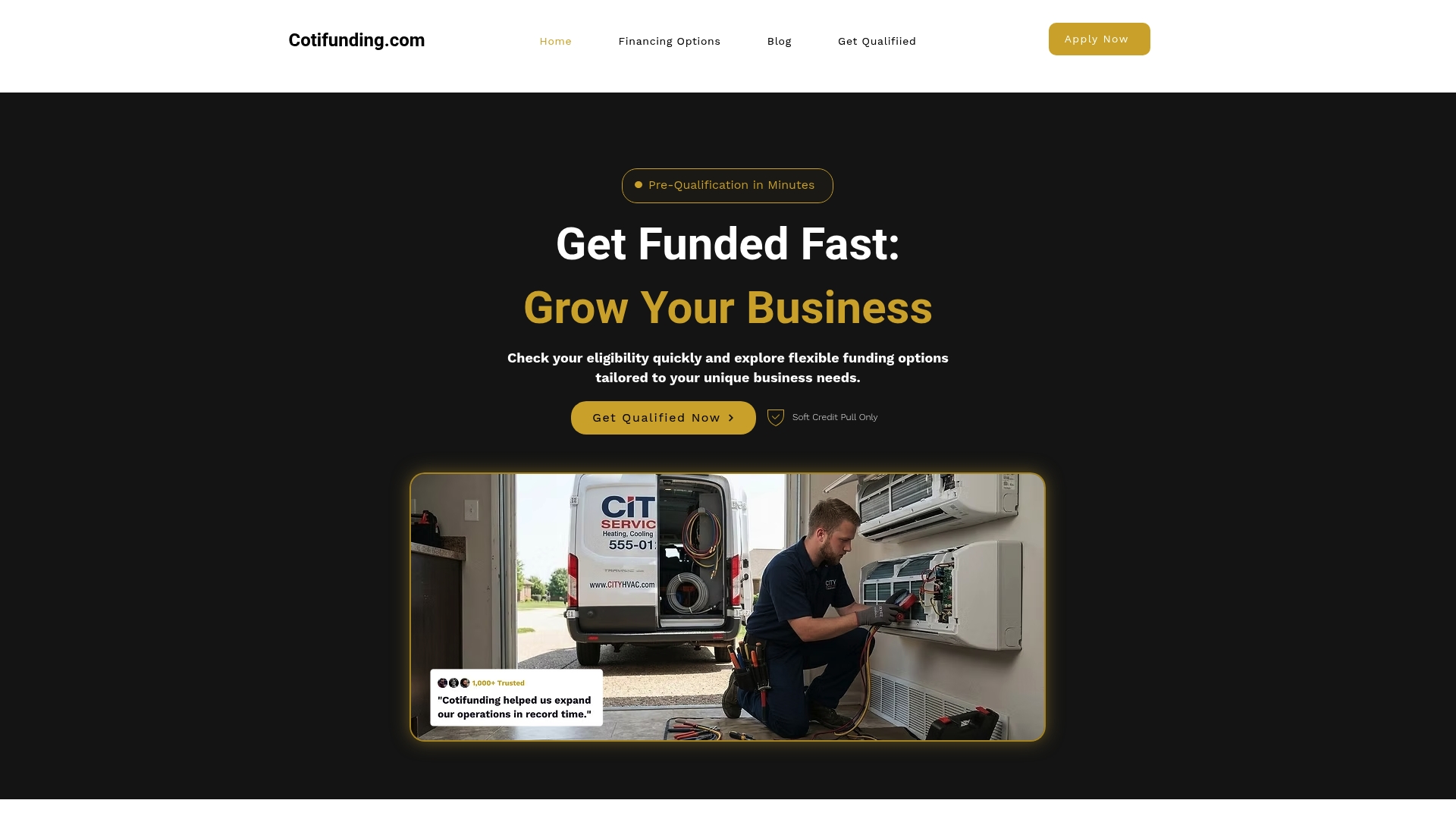
Coti Funding supports a range of products relevant to founders at different stages: SBA loan facilitation for non-dilutive growth capital, equipment financing for physical assets, merchant cash advances for fast short-term cash, and business lines of credit for ongoing working capital needs. Pre-qualifying uses a soft credit pull, so checking your options doesn’t cost you the credit score you’ll need for the actual application. Every offer still depends on the individual lender’s own criteria, approvals are never guaranteed, but a single application replacing five separate ones is real time saved either way. If your business needs equipment or vehicle financing specifically, see how the process works on our auto repair shop financing page, then request your shortlist to see what you actually qualify for.
This article is general information, not a substitute for advice from a qualified financial advisor. Consult a qualified financial professional about your own circumstances before acting on anything here.
Sources
Recommended
Disclosure: Coti Funding is not a direct lender. We connect businesses with independent third-party lenders and financing providers. Financing products, rates, terms, funding amounts, approval requirements, and funding timelines vary by provider and applicant qualifications and are not guaranteed. Any rates, terms, examples, or scenarios presented in this article are for general informational and educational purposes only and may not reflect actual offers available to a particular business. Submission of information or an application does not guarantee approval or funding. This content does not constitute financial, legal, tax, or investment advice.
Comments